Download Oracle Cloud Infrastructure 2022 Architect Professional.1z0-997-22.ExamTopics.2025-08-04.52q.vcex
| Vendor: | Oracle |
| Exam Code: | 1z0-997-22 |
| Exam Name: | Oracle Cloud Infrastructure 2022 Architect Professional |
| Date: | Aug 04, 2025 |
| File Size: | 574 KB |
| Downloads: | 7 |
How to open VCEX files?
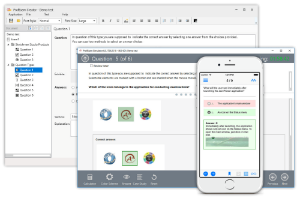
Files with VCEX extension can be opened by ProfExam Simulator.
Discount: 20%

Demo Questions
Question 1
Your company developed a function that needs to access the Oracle Database to inject some data to it at runtime. You are tasked to move this function to the Oracle Cloud Infrastructure (OCI) and use Oracle Functions and access Oracle Autonomous Database. You created a Dockerfile below to run this function, however, you are getting this error "cx_Oracle.DatabaseError: ORA-12560: TNS:protocol adapter error".
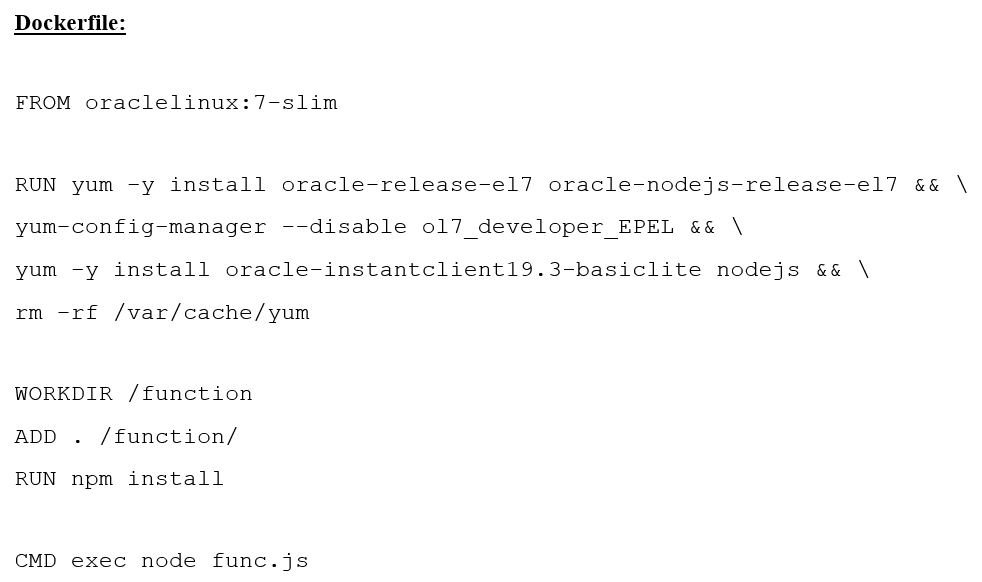
What should you do to make sure that Oracle Functions can run this Dockerfile properly?
- Use --privileged flag while running the Docker container to add runtime privilege.
- Use –cap-add-ALL flag while running the Docker container to add runtime capability.
- You need to run this Container as root, so add this line:USER root
- Add these two lines to your Dockerfile:groupadd --gid 1000 fn && \adduser --uid 1000 --gid fn fn
Correct answer: D
Explanation:
D: 6 - Mosted D: 6 - Mosted
Question 2
You are a cloud architect at a financial organization. The development team is tasked with creating a cloud native application to be hosted on Oracle Cloud Infrastructure (OCI). The development team has followed a microservices-based approach and created containerized images of the cloud-native application and pushed them to OCI Registry (OCIR).
How can you deploy a load balanced application to your OCI Container Engine for Kubernetes (OKE) cluster using these images?
- Create a load balancer using the OCI load balancer service, add the load balancer service IP in the manifest file, add the location of the docker image to the manifest file, and deploy the manifest file.
- Create a named secret, add the secret to the manifest file, add the location of the docker image to the manifest file, add the service of type LoadBalancer in the manifest file, and deploy the manifest file.
- Create an auth token, add the auth token to the manifest file, add the location of the docker image to the manifest file, add the service of type LoadBalancer in the manifest file, and deploy the manifest file.
- Add the location of the docker image to the manifest file, deploy the manifest file. All applications are load-balanced by default in OKE
Correct answer: A
Explanation:
B: 2 - Mosted B: 2 - Mosted
Question 3
An Oracle Cloud Infrastructure (OCI) Public Load Balancers SSL certificate is expiring soon. You notice that the Load Balancer is configured with SSL Termination only. When the certificate expires, data traffic can be interrupted and could compromise security.
What steps do you need to take to prevent this situation?
- Add the new SSL certificate to the Load Balancer and implement end-to-end SSL so it can encrypt the traffic from clients all the way to the backend servers.
- Add the new SSL certificate to the Load Balancer, update listeners and backend sets so they can use the new certificate bundle.
- Add the new SSL certificate to the Load Balancer, update backend servers to work with a new certificate and edit listeners so they can use the new certificate bundle.
- Add the new SSL certificate to the Load Balancer and update listeners to use the new certificate bundle.
- Add the new SSL certificate to the Load Balancer and update backend servers to use the new certificate bundle.
Correct answer: D
Explanation:
D: 4 - Mosted D: 4 - Mosted
Question 4
You have two Virtual Cloud Networks (VCN) that need to be peered. The set up is as follows:
The VCNs are in different tenancies.
Peering has to be via Local Peering Gateway (LPG) because one of the VCNs needs to be added to an existing Hub and Spoke configuration that consists of a hub and two spokes.
There is a CIDR overlap. The VCN that serves as the Hub VCN has a 172.19.0.0/16 CIDR prefix. The other VCN to be added as a Spoke VCN has a 172.19.128.0/17 CIDR prefix.
The other two spokes have 10.0.0.0/16 and 192.168.0.0/16 prefixes, respectively.
What is a possible solution to this problem?
- Use Dynamic Routing Gateway (DRG) instead.
- Add another CIDR prefix to the VCN that is integrating with the Hub and Spoke and does not overlap. Use that CIDR for the LPG connection.
- Review the subnets in the hub VCN. If they all have the third octet under 128, change the VCN prefix to /17.
- Review the subnets in the hub VCN. If they all have the third octet above 128, change the VCN prefix to /17.
- Review all subnets in the hub VCN. If one of them has the third octet at 128, change the VCN prefix to /17.
Correct answer: B
Explanation:
C: 1 - Mosted C: 1 - Mosted
Question 5
A cloud engineer needs to enable routing between two Virtual Cloud Networks (VCN) from his tenancy. The VCNs are in the same region but in different compartments. After reviewing the IPv4 CIDR prefixes of the two VCNs, he notices that there are no overlapping CIDR blocks.
Which THREE are valid Oracle Cloud Infrastructure (OCI) options for connecting and routing between the two VCNs? (Choose three.)
- Create two DRGs in the tenancy. Attach one VCN to one of the DRGs; attach the other VCN to the second DRG. In each one of the DRGs, create a Virtual Circuit Attachment. Select FastConnect Partner as the FastConnect type. Select any vendor from the list and complete the circuit at the partner site. Once the FastConnect IPv4 BGP field is in the UP state in each one of the Virtual Circuits, add a route rule in each one of the VCNs' route table to the other VCN using the DRG as the next hop.
- Create two DRGs in the tenancy. Attach one VCN to one of the DRGs; attach the other VCN to the second DRG. In each one of the DRGs, create a Remote Peering Connection (RPC). Establish a connection from one RPC to the other. In each one of the VCNs' route table, add a route rule to the other VCN using the DRG as the next hop.
- Create a DRG in the tenancy; add one of the VCN as a VCN attachment. In the other VCN, create a Local Peering Gateway (LPG). Peer the DRG to the LPG. In the VCN attached to the DRG, add a route rule in the route table that points to the DRG as the next hop. In the other VCN, add a route rule in the route table that points to the LPG as the next hop.
- Add an LPG to each one of the VCNs. In one of the LPG, establish a Peering Connection to the other LPG. In each one of the VCN route table, add a route rule to the other VCN using the LPG as the next hop.
- Create a DRG in the tenancy; add one of the VCNs as a VCN attachment. In the other VCN, create a Local Peering Gateway (LPG). Peer the DRG to the LPG. In the VCN attached to the DRG, enable BGP routing for the route to propagate to the VCN. In the other VCN add a route rule in the route table that points to the LPG as the next hop.
- Create a Dynamic Routing Gateway (DRG) in the tenancy, add the two VCNs as VCN attachments and add routes in each one of the VCN route tables with the DRG as the next hop for the CIDR prefix of the other VCN.
Correct answer: BDF
Explanation:
BDF: 3 - MostedCDF: 1 BDF: 3 - MostedCDF: 1
Question 6
Your organization needs to migrate legacy monolithic applications into cloud-native containerized RESTful microservices. The development team is testing the use of packaged procedures with containers in a fully serverless environment. Before migrating the existing code to production, the team decides to perform a lift and shift of the monolithic application and code the new features that are essential for serverless microservices.
You want to carry out a steady migration to the Oracle Cloud Infrastructure (OCI) platform, making the new microservice functionalities available while maintaining the monolithic application for all the other activities. You also want to integrate the legacy monolithic application with the new microservices to have a single interface with simplified management for auditing and monitoring while meeting operational and compliance requirements.
How can you meet this requirement?
- Push the container image to OCIR, build a serverless function using the OCI Functions serviceBYOD (Bring-Your-Own-Dockerfile) feature, build an API deployment specification with serverless functions as the back-end, and use an OCI API gateway to provide front-end access to that function.
- Push the container image to the OCI code repository, create an instance template with a Docker container running the image, and create an instance pool with autoscaling configuration. Use the OCI load balancer to provide an API endpoint to connect with the microservice.
- Push the container image to the OCI code repository, build a serverless function using the OCI Functions service BYOD feature, build an API deployment specification with serverless functions as the back-end, and use an OCI API gateway to provide front-end access to that function.
- Push the container image to OCIR, create an instance template with a Docker container running the image, and create an instance pool with autoscaling configuration. Use the OCI load balancer to provide an API endpoint to connect with the microservice.
Correct answer: B
Explanation:
A: 1 - Mosted A: 1 - Mosted
Question 7
Which of the two options are true for an autonomous database in dedicated infrastructure deployment? (Choose two.)
- You can modify maintenance schedule of the AVM after provisioning, to match your organization maintenance schedules.
- The new resource model consists of autonomous exadata infrastructure, autonomous container database and autonomous database.
- Unlike autonomous database in shared infrastructure, you can customize the maintenance schedule of the autonomous databases in dedicated infrastructure in OCI public cloud.
- The new resource model consists of exadata infrastructure, autonomous Exadata VM cluster, autonomous container database.
- Network selection, License model and certificate management are resources configured at AVM level.
Correct answer: DE
Explanation:
AD: 1 - Mosted AD: 1 - Mosted
Question 8
You are a Lead Architect at one of the leading consulting firms. Your firm has workloads deployed in both Oracle Cloud Infrastructure (OCI) and Microsoft Azure. You are asked to design a solution where workloads on both clouds can communicate directly and efficiently. You would like to set up a private interconnection between OCI and Microsoft Azure.
What are the steps you need to perform on the OCI side to set up the interconnection?
- Create a VCN with subnets and attach a DRG to the VCN. Create a FastConnect connection of the connection type "FastConnect Partner" and select "Microsoft Azure: ExpressRoute” as the Partner. Create a public virtual circuit, provide details of the DRG and add the “partner connection key” provided by Microsoft Azure. Configure OCI VCN Security Lists and Route Tables.
- Create a Virtual Cloud Network (VCN) with subnets and attach a Virtual Network Gateway to the VCN. Create a FastConnect connection of the connection type "FastConnect Partner" and select "Microsoft Azure: ExpressRoute" as the Partner. Create a private virtual circuit, provide details of the Dynamic Routing Gateway (DRG) and add the "partner interconnect key" provided by Microsoft Azure. Provide the BGP IP addresses. Configure OCI VCN Security Lists and Route Tables.
- Create a VCN with subnets and attach a DRG to the VCN. Create a FastConnect connection of the connection type "FastConnect Direct". Create a Cross-Connect Group, provide details of the DRG and add the "partner secret key" provided by Microsoft Azure. Provide the BGP IP addresses, Configure OCI VCN Security Lists and Route Tables.
- Create a VCN with subnets and attach a DRG to the VCN. Create a FastConnect connection of the connection type "FastConnect Partner" and select "Microsoft Azure: ExpressRoute" as the Partner. Create a private virtual circuit, provide details of the DRG and add the "partner service key" provided by Microsoft Azure. Provide the BGP IP addresses, Configure OCI VCN Security Lists and Route Tables.
Correct answer: D
Explanation:
D: 2 - Mosted D: 2 - Mosted
Question 9
A new international hacktivist group, based in London, launched wide scale cyber attacks including SQL Injection and Cross-Site Scripting (XSS) across multiple websites hosted in Oracle Cloud Infrastructure (OCI). As an IT consultant, you must configure a Web Application Firewall (WAF) to protect these websites against such attacks.
How would you configure your WAF to protect the website against those attacks?
- Enable an Access Rule to block the IP Address range from London.
- Enable an Access Rule that contains XSS Filters Categories and SQL Filters Categories.
- Enable a Protection Rule to block the attacks based on HTTP Headers that contain XSS and SQL strings.
- Enable a Protection Rule to block requests that came from London.
- Enable a Protection Rule that contains XSS Filters Categories and SQL Filters Categories.
Correct answer: E
Explanation:
E: 4 - Mosted E: 4 - Mosted
Question 10
Your company has recently deployed a new web application that uses Oracle Functions. Your manager instructs you to implement monitoring metrics to manage your systems more effectively. You know that Oracle Functions automatically monitors functions on your behalf and reports metrics through Service Metrics.
Which TWO metrics are collected and made available by this feature? (Choose two.)
- Length of time a function runs
- Number of times a function is invoked
- Amount of CPU used by a function
- Number of concurrent connections
- Number of times a function is removed
Correct answer: AB
Explanation:
AB: 3 - Mosted AB: 3 - Mosted
Question 11
A company runs a public-facing application that uses a Java-based web service via a RESTful API in their on-premises data center. Use of the API is expected to double with a new product launch. The business wants to migrate their application to Oracle Cloud Infrastructure (OCI) to meet the scale and reliability requirements.
In order to achieve this, they will divert only 40% of the traffic to the new Apache Tomcat web servers running on OCI and serve the remaining 60% traffic through their on-premises infrastructure. Once the migration is complete and application works fine, they will divert all traffic to OCI.
How can these requirements be met with the LEAST amount of effort?
- Set up a VPN connectivity between on-premises infrastructure and OCI and create routing tables to distribute traffic between them.
- Use OCI Traffic management service with Failover steering policy and distribute traffic between OCI and on-premises infrastructure.
- Use OCI Load Balancing service to distribute traffic between OCI and on-premises infrastructure.
- Use OCI Traffic management service with Load Balancing steering policy and distribute traffic between OCI and on-premises infrastructure.
Correct answer: D
Explanation:
D: 2 - Mosted D: 2 - Mosted
HOW TO OPEN VCE FILES
Use VCE Exam Simulator to open VCE files
HOW TO OPEN VCEX AND EXAM FILES
Use ProfExam Simulator to open VCEX and EXAM files
ProfExam at a 20% markdown
You have the opportunity to purchase ProfExam at a 20% reduced price
Get Now!