Download Implementation Engineer-SAN ONTAP Exam.NS0-521.Braindump2go.2025-11-06.35q.vcex
| Vendor: | NetApp |
| Exam Code: | NS0-521 |
| Exam Name: | Implementation Engineer-SAN ONTAP Exam |
| Date: | Nov 06, 2025 |
| File Size: | 30 KB |
| Downloads: | 1 |
How to open VCEX files?
Files with VCEX extension can be opened by ProfExam Simulator.
Discount: 20%

Demo Questions
Question 1
What connectivity Is required between NetApp ONTAP clusters in order to configure SnapMirror active sync across two data centers for FC?
- Cedicated FC switches and ISL
- Shared FC switches
- Cluster peering
- Dedicated IP switches and ISL
Correct answer: C
Explanation:
To configure SnapMirror active sync across two data centers using FC (Fibre Channel), the required connectivity between NetApp ONTAP clusters is cluster peering. Cluster peering involves establishing a trust relationship between the clusters, allowing them to replicate data seamlessly. This setup ensures that data synchronization and disaster recovery processes are effective and reliable. To configure SnapMirror active sync across two data centers using FC (Fibre Channel), the required connectivity between NetApp ONTAP clusters is cluster peering. Cluster peering involves establishing a trust relationship between the clusters, allowing them to replicate data seamlessly. This setup ensures that data synchronization and disaster recovery processes are effective and reliable.
Question 2
What is the minimum number of rack units that are required on each site for a NetApp AFF All San Array (ASA) A800 MetroCluster IP configuration with 72 disks per site and Cisco N9K-C9336C-FX2 backend switches?
- 16 RU
- 8 RU
- 12 RU
- 4 RU
Correct answer: A
Explanation:
For a NetApp AFF All SAN Array (ASA) A800 MetroCluster IP configuration with 72 disks per site and Cisco N9K-C9336C-FX2 backend switches, the minimum number of rack units required on each site is 16 RU. This includes space for the controllers, disk shelves, and the necessary network switches. This configuration ensures that all components are properly accommodated and operational within the specified rack space. For a NetApp AFF All SAN Array (ASA) A800 MetroCluster IP configuration with 72 disks per site and Cisco N9K-C9336C-FX2 backend switches, the minimum number of rack units required on each site is 16 RU. This includes space for the controllers, disk shelves, and the necessary network switches. This configuration ensures that all components are properly accommodated and operational within the specified rack space.
Question 3
What Is modified when moving a LUN between different HA pairs in the same SVM to prevent loss of connectivity?
- port name
- reporting nodes
- igroup
- LUN mapping
Correct answer: B
Explanation:
When moving a LUN between different HA pairs in the same SVM to prevent loss of connectivity, the reporting nodes must be modified. The reporting nodes configuration ensures that the initiator paths are properly updated to reflect the new physical location of the LUN. This prevents disruptions in connectivity by maintaining the correct pathing information for the host systems accessing the LUN. When moving a LUN between different HA pairs in the same SVM to prevent loss of connectivity, the reporting nodes must be modified. The reporting nodes configuration ensures that the initiator paths are properly updated to reflect the new physical location of the LUN. This prevents disruptions in connectivity by maintaining the correct pathing information for the host systems accessing the LUN.
Question 4
A customer has created an SVM for their SAN workloads. They now want to configure the SVM to use NVMe/FC. Which two steps are needed to accomplish this task? (Choose two.)
- Add the FC protocol.
- Create the FC service.
- Create an NVMe/FC LIF.
- Create the NVMe service.
Correct answer: AC
Explanation:
To configure an SVM to use NVMe/FC, the following steps are necessary:Add the FC protocol: This step involves enabling the Fibre Channel protocol on the SVM, which is required to support NVMe over Fibre Channel.Create an NVMe/FC LIF: Logical Interfaces (LIFs) must be created to handle NVMe traffic over the Fibre Channel network.These LIFs enable the NVMe namespace access to the host systems. These steps ensure that the SVM is correctly set up to use NVMe/FC, allowing for efficient and high-performance access to NVMe storage. To configure an SVM to use NVMe/FC, the following steps are necessary:
Add the FC protocol: This step involves enabling the Fibre Channel protocol on the SVM, which is required to support NVMe over Fibre Channel.
Create an NVMe/FC LIF: Logical Interfaces (LIFs) must be created to handle NVMe traffic over the Fibre Channel network.
These LIFs enable the NVMe namespace access to the host systems. These steps ensure that the SVM is correctly set up to use NVMe/FC, allowing for efficient and high-performance access to NVMe storage.
Question 5
A storage administrator wants to increase security and optimize performance in a recently implemented SAN deployment.
What should the storage administrator configure to ensure initiator restriction to certain LIFs?
- Subnets
- Network route
- Broadcast domain.
- Access list
Correct answer: D
Explanation:
To increase security and optimize performance in a SAN deployment, configuring an access list is essential. Access lists restrict initiator access to specific LIFs, ensuring that only authorized hosts can connect to the storage system. This helps in enhancing security by preventing unauthorized access and optimizes performance by controlling and managing the paths used for storage access. To increase security and optimize performance in a SAN deployment, configuring an access list is essential. Access lists restrict initiator access to specific LIFs, ensuring that only authorized hosts can connect to the storage system. This helps in enhancing security by preventing unauthorized access and optimizes performance by controlling and managing the paths used for storage access.
Question 6
A LUN Is displaying 90% used space in the NetApp ONTAP CLI, but a Windows Server shows only 10% used space.
What is the first step to take to address this issue?
- Enable automatic resizing.
- Disable automatic resizing.
- Disable space allocation.
- Enable space allocation.
Correct answer: D
Explanation:
When a LUN shows 90% used space in the NetApp ONTAP CLI but a Windows Server shows only 10% used space, the discrepancy is often due to how space allocation is handled between the two systems. Enabling space allocation ensures that the ONTAP system accurately reflects the actual space usage as reported by the host system, in this case, the Windows Server. This adjustment allows ONTAP to reclaim and manage space more effectively, aligning the reported usage between the ONTAP system and the host. When a LUN shows 90% used space in the NetApp ONTAP CLI but a Windows Server shows only 10% used space, the discrepancy is often due to how space allocation is handled between the two systems. Enabling space allocation ensures that the ONTAP system accurately reflects the actual space usage as reported by the host system, in this case, the Windows Server. This adjustment allows ONTAP to reclaim and manage space more effectively, aligning the reported usage between the ONTAP system and the host.
Question 7
A storage administrator recently implemented ISCSI SAN in a customer environment. Which two actions should be done to ensure the best performance? (Choose two.)
- Connect host and storage ports to the same switches.
- Decrease the default queue depth on the host to eight.
- Zone the host by using the host WWPNs.
- Configure Jumbo frames In the entire data path.
Correct answer: AD
Explanation:
To ensure the best performance in an iSCSI SAN implementation:Connect host and storage ports to the same switches: This minimizes latency and maximizes the efficiency of data paths by ensuring direct connections within the same network segment.Configure Jumbo frames in the entire data path: Setting a larger Maximum Transmission Unit (MTU) size reduces the overhead for processing each packet, thus improving overall network performance. Ensuring Jumbo frames are configured end-to-end in the data path is crucial for optimal performance. To ensure the best performance in an iSCSI SAN implementation:
Connect host and storage ports to the same switches: This minimizes latency and maximizes the efficiency of data paths by ensuring direct connections within the same network segment.
Configure Jumbo frames in the entire data path: Setting a larger Maximum Transmission Unit (MTU) size reduces the overhead for processing each packet, thus improving overall network performance. Ensuring Jumbo frames are configured end-to-end in the data path is crucial for optimal performance.
Question 8
An administrator is configuring ISCSI on an SVM and requires that all network traffic Is encrypted.
What must be done to satisfy this requirement?
- Configure aggregate encryption.
- Configure IPsec.
- Enable FIPS mode.
- Use CHAP for iSCSI.
Correct answer: B
Explanation:
To ensure that all network traffic is encrypted for iSCSI on an SVM, configuring IPsec is required. IPsec (Internet Protocol Security) provides end-to-end encryption for IP traffic, ensuring that data transmitted over the network is secure. To ensure that all network traffic is encrypted for iSCSI on an SVM, configuring IPsec is required. IPsec (Internet Protocol Security) provides end-to-end encryption for IP traffic, ensuring that data transmitted over the network is secure.
Question 9
What Is a recommended setting for using the NetApp ONTAP LUN fractional reserve?
- LUN space reservation is disabled.
- Space allocation is set to enable.
- Space guarantee is set to volume.
- Volume Snapshot copy automatic deletion is disabled.
Correct answer: C
Explanation:
The recommended setting for using the NetApp ONTAP LUN fractional reserve is to set the space guarantee to “volume”. This setting ensures that the required space for overwrites in the volume is reserved, preventing potential write failures when snapshot copies are created. This setup helps in maintaining the performance and reliability of the storage system by ensuring there is always enough space allocated for the LUN. The recommended setting for using the NetApp ONTAP LUN fractional reserve is to set the space guarantee to “volume”. This setting ensures that the required space for overwrites in the volume is reserved, preventing potential write failures when snapshot copies are created. This setup helps in maintaining the performance and reliability of the storage system by ensuring there is always enough space allocated for the LUN.
Question 10
A customer has data in a LUN on an existing third-party SAN storage system that will be migrated to a new NetApp AFF A400 all-flash MetroCluster system. The host connected to the LUN is a Windows Server 2019 system.
In this scenario, which two methods are supported? (Choose two.)
- SnapMirror Business Continuity
- Foreign LUN Import in online mode
- Foreign LUN Import in offline mode
- Client-side copy of the data
Correct answer: BC
Explanation:
To migrate data from a LUN on an existing third-party SAN storage system to a new NetApp AFF A400 all-flash MetroCluster system, the supported methods include:Foreign LUN Import in online mode: This method allows for data migration without significant downtime, enabling the system to continue serving data while the migration process is ongoing.Foreign LUN Import in offline mode: This method involves taking the LUN offline during the migration process, which may be necessary in certain scenarios to ensure data integrity. To migrate data from a LUN on an existing third-party SAN storage system to a new NetApp AFF A400 all-flash MetroCluster system, the supported methods include:
Foreign LUN Import in online mode: This method allows for data migration without significant downtime, enabling the system to continue serving data while the migration process is ongoing.
Foreign LUN Import in offline mode: This method involves taking the LUN offline during the migration process, which may be necessary in certain scenarios to ensure data integrity.
Question 11
What needs to be done to create a consistent Snapshot copy of a LUN without disruptions?
- Ensure that the LUN is the only one in the volume.
- Quiesce I/O to the LUN.
- Ensure that the LUN Is unmapped from the host.
- Map the LUN to a host.
Correct answer: B
Explanation:
To create a consistent Snapshot copy of a LUN without disruptions, it is necessary to quiesce I/O to the LUN. This process involves pausing or temporarily stopping the input/output operations to ensure that the data is in a consistent state when the snapshot is taken. This method is crucial for maintaining data integrity and consistency in the snapshot. To create a consistent Snapshot copy of a LUN without disruptions, it is necessary to quiesce I/O to the LUN. This process involves pausing or temporarily stopping the input/output operations to ensure that the data is in a consistent state when the snapshot is taken. This method is crucial for maintaining data integrity and consistency in the snapshot.
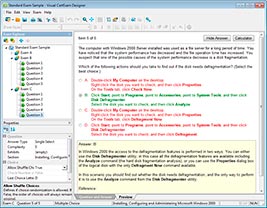
HOW TO OPEN VCE FILES
Use VCE Exam Simulator to open VCE files
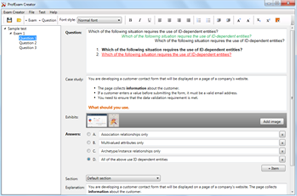
HOW TO OPEN VCEX AND EXAM FILES
Use ProfExam Simulator to open VCEX and EXAM files
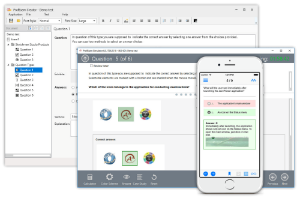
ProfExam at a 20% markdown
You have the opportunity to purchase ProfExam at a 20% reduced price
Get Now!