Download Cisco Contact Center Enterprise Implementation and Troubleshooting.500-444.Pass4Success.2026-01-29.45q.vcex
| Vendor: | Cisco |
| Exam Code: | 500-444 |
| Exam Name: | Cisco Contact Center Enterprise Implementation and Troubleshooting |
| Date: | Jan 29, 2026 |
| File Size: | 37 KB |
How to open VCEX files?
Files with VCEX extension can be opened by ProfExam Simulator.
Discount: 20%

Demo Questions
Question 1
What are two specifications for UC on UCS Tested Reference Configuration (TRC)? (Choose two.)
- defined as Configuration Based
- VMware vSphere is optional
- VMware vCenter is required
- defined as Rule Based
- VMware vSphere is required
Correct answer: A, D
Explanation:
The UCS Tested Reference Configuration (TRC) is a validated server configuration for running Unified Computing System (UCS) in a data center environment. It is defined as either Configuration Based or Rule Based, depending on the specific use case. Configuration Based defines the server configuration based on specific performance characteristics, while Rule Based defines the server configuration based on specific usage. VMware vCenter is required for either Configuration Based or Rule Based, while VMware vSphere is optional. The UCS Tested Reference Configuration (TRC) is a validated server configuration for running Unified Computing System (UCS) in a data center environment. It is defined as either Configuration Based or Rule Based, depending on the specific use case. Configuration Based defines the server configuration based on specific performance characteristics, while Rule Based defines the server configuration based on specific usage. VMware vCenter is required for either Configuration Based or Rule Based, while VMware vSphere is optional.
Question 2
Which two certificates do the Cisco Finesse primary and secondary servers accept when HTTPS protocol is used to access the administration console or agent desktop in Cisco Finesse? (Choose two.)
- Domain validation certificate
- Digital certificate
- Self-signed certificate
- Certificate authority certificate
- Root certificate
Correct answer: B, D
Explanation:
https://www.cisco.com/c/en/us/td/docs/voice_ip_comm/cust_contact/contact_center/finesse/finesse_1151/Admin/guide/CFIN_BK_C0CD262D_00_cisco-finesse-administration-guide-1151/CFIN_BK_C0CD262D_00_cisco-finesse-administration-guide-1151_chapter_01001.pdfWhen the HTTPS protocol is used to access the administration console or agent desktop in Cisco Finesse, the primary and secondary servers accept only digital certificates that are issued by a certificate authority (CA).A digital certificate is an electronic document that uses a digital signature to bind a public key with an identity, such as the name of a person or an organization, and the certificate is issued by a trusted third party, such as a certificate authority (CA). The digital certificate confirms the identity of the server and enables secure communication between the client and the server.A certificate authority (CA) certificate is a type of digital certificate that is issued by a trusted third party, such as a certificate authority (CA), to verify the identity of an entity and establish trust.https://www.cisco.com/c/en/us/support/docs/voice-unified-communications/finesse/118248-configure-certificates-finesse-00.htmlhttps://www.globalsign.com/en/ssl-information-center/what-is-a-digital-certificate/ https://www.cisco.com/c/en/us/td/docs/voice_ip_comm/cust_contact/contact_center/finesse/finesse_1151/Admin/guide/CFIN_BK_C0CD262D_00_cisco-finesse-administration-guide-1151/CFIN_BK_C0CD262D_00_cisco-finesse-administration-guide-1151_chapter_01001.pdf
When the HTTPS protocol is used to access the administration console or agent desktop in Cisco Finesse, the primary and secondary servers accept only digital certificates that are issued by a certificate authority (CA).
A digital certificate is an electronic document that uses a digital signature to bind a public key with an identity, such as the name of a person or an organization, and the certificate is issued by a trusted third party, such as a certificate authority (CA). The digital certificate confirms the identity of the server and enables secure communication between the client and the server.
A certificate authority (CA) certificate is a type of digital certificate that is issued by a trusted third party, such as a certificate authority (CA), to verify the identity of an entity and establish trust.
https://www.cisco.com/c/en/us/support/docs/voice-unified-communications/finesse/118248-configure-certificates-finesse-00.html
https://www.globalsign.com/en/ssl-information-center/what-is-a-digital-certificate/
Question 3
What is an enterprise-focused Session Border Controller (SBC) providing voice and video connectivity from the enterprise IP network to service provider SIP trunks?
- CUCM
- CUBE
- CVP
- DNIS
Correct answer: B
Explanation:
A Session Border Controller (SBC) is a networking device designed to secure and control voice and video traffic as it enters and leaves an enterprise IP network. An enterprise-focused SBC provides voice and video connectivity from the enterprise IP network to service provider SIP trunks, ensuring that the calls are compliant with service provider requirements. CUBE (Cisco Unified Border Element) is an enterprise-focused SBC from Cisco that provides voice and video connectivity from the enterprise IP network to service provider SIP trunks. CUCM (Cisco Unified Communications Manager), CVP (Customer Voice Portal), and DNIS (Dialed Number Identification Service) are not enterprise-focused SBCs. A Session Border Controller (SBC) is a networking device designed to secure and control voice and video traffic as it enters and leaves an enterprise IP network. An enterprise-focused SBC provides voice and video connectivity from the enterprise IP network to service provider SIP trunks, ensuring that the calls are compliant with service provider requirements. CUBE (Cisco Unified Border Element) is an enterprise-focused SBC from Cisco that provides voice and video connectivity from the enterprise IP network to service provider SIP trunks. CUCM (Cisco Unified Communications Manager), CVP (Customer Voice Portal), and DNIS (Dialed Number Identification Service) are not enterprise-focused SBCs.
Question 4
Which team is responsible for ensuring that servers designated for use by CCE VMs meet these requirements, including but not limited to Storage System Performance and IOPS (Input/Output Operations Per Second) Requirements?
- Design team
- Deployment team
- Support Team
- Sales team
Correct answer: B
Explanation:
The URL for the VOS O/S admin page is https://:8443/osadmin. This page allows administrators to manage the VOS operating system, including viewing logs, managing users and groups, and managing system settings. It is also possible to access the VOS platform administration page from this page, as well as access the VOS REST API. The URL for the VOS O/S admin page is https://:8443/osadmin. This page allows administrators to manage the VOS operating system, including viewing logs, managing users and groups, and managing system settings. It is also possible to access the VOS platform administration page from this page, as well as access the VOS REST API.
Question 5
What must be enabled on the CUIC server for CUIC reports to show up in Finesse?
- PROXY
- Cross Origin Resource Sharing (CORS)
- Hazelcast
- JSONP
Correct answer: A, B
Explanation:
1. to provide validation of certificate requests: A CA is responsible for verifying the identity of an entity before issuing a certificate. This includes verifying the entity's identity, such as by checking government-issued identification or business registration documents.2. to issue a CA-signed Identity certificates: After validating the entity's identity, the CA issues the certificate, which is signed by the CA's private key. This certificate can be used to authenticate the identity of the entity, establish trust and secure communication.https://tools.ietf.org/html/rfc5280https://www.globalsign.com/en/ca-services/what-is-a-ca/ 1. to provide validation of certificate requests: A CA is responsible for verifying the identity of an entity before issuing a certificate. This includes verifying the entity's identity, such as by checking government-issued identification or business registration documents.
2. to issue a CA-signed Identity certificates: After validating the entity's identity, the CA issues the certificate, which is signed by the CA's private key. This certificate can be used to authenticate the identity of the entity, establish trust and secure communication.
https://tools.ietf.org/html/rfc5280
https://www.globalsign.com/en/ca-services/what-is-a-ca/
Question 6
What are two roles of a Certificate Authority (CA) in a trusted third-party CA certificate? (Choose two.)
- to provide validation of certificate requests
- to issue a CA signed Identity certificates
- to provide domain validation certificate
- to import the root CA certificate to each component
- to generate a new Certificate Signing Request (CSR)
Correct answer: A, B
Explanation:
1. to provide validation of certificate requests: A CA is responsible for verifying the identity of an entity before issuing a certificate. This includes verifying the entity's identity, such as by checking government-issued identification or business registration documents.2. to issue a CA-signed Identity certificates: After validating the entity's identity, the CA issues the certificate, which is signed by the CA's private key. This certificate can be used to authenticate the identity of the entity, establish trust and secure communication.https://tools.ietf.org/html/rfc5280https://www.globalsign.com/en/ca-services/what-is-a-ca/ 1. to provide validation of certificate requests: A CA is responsible for verifying the identity of an entity before issuing a certificate. This includes verifying the entity's identity, such as by checking government-issued identification or business registration documents.
2. to issue a CA-signed Identity certificates: After validating the entity's identity, the CA issues the certificate, which is signed by the CA's private key. This certificate can be used to authenticate the identity of the entity, establish trust and secure communication.
https://tools.ietf.org/html/rfc5280
https://www.globalsign.com/en/ca-services/what-is-a-ca/
Question 7
Which Cisco Unified Border Element configuration is used in Contact Center Enterprise with Cisco Unified Customer Voice Portal and Cisco Unified Border Element deployment?
- voice gateway must be dedicated for VXML browser sessions.
- Cisco Unified Border Element must be configured as media pass flow-around mode.
- Cisco Unified Border Element must be configured as media pass flow-through mode.
- Box-to-box Cisco Unified Border Element must be used for redundancy.
Correct answer: C
Explanation:
In a Contact Center Enterprise with Cisco Unified Customer Voice Portal and Cisco Unified Border Element deployment, the Cisco Unified Border Element must be configured as media pass flow-through mode. In this mode, the Unified Border Element is configured to route all media traffic directly to the customer voice portal and not through the voice gateway. In a Contact Center Enterprise with Cisco Unified Customer Voice Portal and Cisco Unified Border Element deployment, the Cisco Unified Border Element must be configured as media pass flow-through mode. In this mode, the Unified Border Element is configured to route all media traffic directly to the customer voice portal and not through the voice gateway.
Question 8
What are two upgrades for Common Ground? (Choose two.)
- updates IP address as appropriate
- in-place upgrades exist on VMs
- updates Hostname as appropriate
- includes migration of windows registry
- includes database migration
Correct answer: C, E
Explanation:
Common Ground is a Cisco solution for contact center environments, which enables customers to use multiple channels, such as voice, chat, and email, to interact with agents. Upgrading Common Ground usually involves several steps, including:Updating the hostname as appropriate: Depending on the configuration and organization of the system, it may be necessary to update the hostname to ensure that all components are properly identified and connected.Database migration: As part of the upgrade process, the Common Ground database may need to be migrated to a new version or schema. This is done to ensure that the database is compatible with the new version of Common Ground and that all data is preserved during the upgrade.Updating IP address: Depending on the network and IP addressing scheme, it may be necessary to update the IP addresses of Common Ground components to ensure that they are properly configured and accessible.Updating registry: Windows registry may need to be updated as well, to ensure that the correct configurations and settings are in place after the upgrade.In-place upgrades: In-place upgrades are the upgrades that can be done on the same version of the software without the need to install new version of the software. Common Ground is a Cisco solution for contact center environments, which enables customers to use multiple channels, such as voice, chat, and email, to interact with agents. Upgrading Common Ground usually involves several steps, including:
Updating the hostname as appropriate: Depending on the configuration and organization of the system, it may be necessary to update the hostname to ensure that all components are properly identified and connected.
Database migration: As part of the upgrade process, the Common Ground database may need to be migrated to a new version or schema. This is done to ensure that the database is compatible with the new version of Common Ground and that all data is preserved during the upgrade.
Updating IP address: Depending on the network and IP addressing scheme, it may be necessary to update the IP addresses of Common Ground components to ensure that they are properly configured and accessible.
Updating registry: Windows registry may need to be updated as well, to ensure that the correct configurations and settings are in place after the upgrade.
In-place upgrades: In-place upgrades are the upgrades that can be done on the same version of the software without the need to install new version of the software.
Question 9
Which mode can be used to display data flow in the Script?
- Edit Mode
- Monitor Mode
- Quick Edit Mode
- Browse Mode
Correct answer: D
Explanation:
An AW/HDS machine is a hybrid of an AW client machine and a Secondary AW machine, and it is used to run automated deferred sync jobs. These jobs are typically used to transfer data between two or more AW machines, and the AW/HDS machine acts as the intermediary, making sure that all of the data is kept up-to-date and in sync. An AW/HDS machine is a hybrid of an AW client machine and a Secondary AW machine, and it is used to run automated deferred sync jobs. These jobs are typically used to transfer data between two or more AW machines, and the AW/HDS machine acts as the intermediary, making sure that all of the data is kept up-to-date and in sync.
Question 10
Which powerful tool supports Element Grouping, Time of Day routing, and Call Admission Control?
- VGW
- CUSP
- CUBE
- CUCM
Correct answer: C
Explanation:
The powerful tool that supports Element Grouping, Time of Day routing, and Call Admission Control is CUBE (Cisco Unified Border Element). CUBE is a powerful routing tool that provides intelligent call routing, call admission control, and Quality of Service (QoS) for voice, video, and data traffic. It supports Element Grouping, which allows for multiple paths for the same endpoint to be used for load balancing and redundancy. It also supports Time of Day routing, which allows for the selection of a routing path based on the time of day for a call. Finally, it supports call admission control, which ensures that calls are routed according to the QoS parameters set by the administrator. The powerful tool that supports Element Grouping, Time of Day routing, and Call Admission Control is CUBE (Cisco Unified Border Element). CUBE is a powerful routing tool that provides intelligent call routing, call admission control, and Quality of Service (QoS) for voice, video, and data traffic. It supports Element Grouping, which allows for multiple paths for the same endpoint to be used for load balancing and redundancy. It also supports Time of Day routing, which allows for the selection of a routing path based on the time of day for a call. Finally, it supports call admission control, which ensures that calls are routed according to the QoS parameters set by the administrator.
Question 11
What are two considerations for Active Directory (AD)? (Choose two.)
- user interface available
- Remote Access Control is available for software
- Read-Only Domain Controllers (RODC) are supported
- global catalogs are required at each AD site
- supports multi-domain, single AD Forest topology
Correct answer: C, E
Explanation:
Two considerations for Active Directory (AD) are that Read-Only Domain Controllers (RODC) are supported and that it supports multi-domain, single AD Forest topology. RODC are used to provide secure access to AD data in remote locations, and the multi-domain, single AD Forest topology allows multiple domains to be managed from a single AD forest. Additionally, global catalogs are required at each AD site to enable efficient searches across the entire AD forest. AD does not provide a user interface, but Remote Access Control is available for software that is used to manage and administer the AD environment. Two considerations for Active Directory (AD) are that Read-Only Domain Controllers (RODC) are supported and that it supports multi-domain, single AD Forest topology. RODC are used to provide secure access to AD data in remote locations, and the multi-domain, single AD Forest topology allows multiple domains to be managed from a single AD forest. Additionally, global catalogs are required at each AD site to enable efficient searches across the entire AD forest. AD does not provide a user interface, but Remote Access Control is available for software that is used to manage and administer the AD environment.
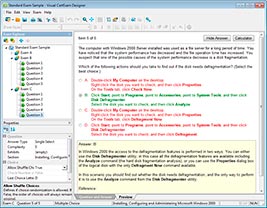
HOW TO OPEN VCE FILES
Use VCE Exam Simulator to open VCE files
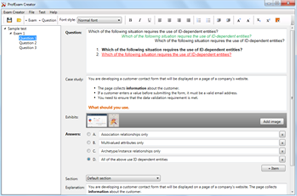
HOW TO OPEN VCEX AND EXAM FILES
Use ProfExam Simulator to open VCEX and EXAM files
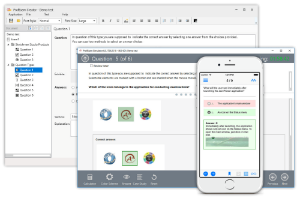
ProfExam at a 20% markdown
You have the opportunity to purchase ProfExam at a 20% reduced price
Get Now!