Download AWS Certified Database - Specialty.DBS-C01.ExamTopics.2026-05-04.235q.vcex
| Vendor: | Amazon |
| Exam Code: | DBS-C01 |
| Exam Name: | AWS Certified Database - Specialty |
| Date: | May 04, 2026 |
| File Size: | 2 MB |
How to open VCEX files?
Files with VCEX extension can be opened by ProfExam Simulator.
Discount: 20%

Demo Questions
Question 1
An advertising company is developing a backend for a bidding platform. The company needs a cost-effective datastore solution that will accommodate a sudden increase in the volume of write transactions. The database also needs to make data changes available in a near real-time data stream.
Which solution will meet these requirements?
- Amazon Aurora MySQL Multi-AZ DB cluster
- Amazon Keyspaces (for Apache Cassandra)
- Amazon DynamoDB table with DynamoDB auto scaling
- Amazon DocumentDB (with MongoDB compatibility) cluster with a replica instance in a second Availability Zone
Correct answer: C
Question 2
A legal research company wants to build a recommendation engine on AWS that connects datasets to help lawyers create legal arguments. The recommendation engine will collect millions of unstructured text documents from third-party sources to identify connections between documents without users needing to manually compare the documents.
Which solution will meet these requirements with the LEAST operational overhead?
- Build a graph-based recommendation engine by using Amazon Neptune. Search the documents for vertices with relationships among the different sources to connect.
- Create an AWS Lambda application in which the documents are uploaded into Amazon S3. Populate Amazon DynamoDB tables with the metadata of the documents for users to search.
- Develop a serverless document scanner by using Amazon Textract to analyze the text from the various sources. Store the detected text in an Amazon Aurora database for analysis.
- Define the data sources in an Amazon S3 data lake. Analyze the documents by using AWS Glue. Query the documents for relationships by using Amazon Athena.
Correct answer: A
Question 3
A company recently created a snapshot of an Amazon RDS for PostgreSQL DB instance that hosts a production database. The company created a new DB instance from the snapshot to test a new application feature while providing isolation from the production database.
During testing of the new application feature, the company noticed that read latency on the new database was higher than normal. A database specialist needs to resolve the latency issue.
Which solution will meet these requirements with the MOST operational efficiency?
- Log in to the database by using the PostgreSQL administration tool. Issue a SELECT * command against each table in the database.
- Create a new parameter group and set the max_connections parameter to 100. Assign the parameter group to the new database. Apply the changes immediately.
- Edit the default parameter group for the matching PostgreSQL engine. Set the max_connections parameter to 100. Reboot the new database to pick up the changes to the parameter group.
- Login to the database by using the PostgreSQL administration tool. Issue the VACUUM (ANALYZE, DISABLE_PAGE_SKIPPING) command.
Correct answer: D
Question 4
A company is using an Amazon RDS for MySQL DB instance for a production application. During the company’s upcoming scheduled maintenance window, a database specialist will perform a major version upgrade to the DB instance. The application is critical, so the company wants to minimize the maintenance time and allow for a rollback if a problem occurs.
Which solution will meet these requirements?
- Enable the automatic upgrade option by using the AWS Management Console. Amazon RDS will apply the upgrade, which will occur during the scheduled maintenance window with no downtime.
- Create a new DB instance that has the desired version. Configure AWS Database Migration Service (AWS DMS) to migrate the existing data to the new DB instance. Change the DNS records to point to the new DB instance.
- Create read replica of the DB instance. Upgrade the version on the read replica. Promote the read replica to be the primary DB instance. Direct the application to use the read replica endpoint.
- Create a read replica of the DB instance. Configure a policy to fall over to the read replica if failure occurs during the upgrade. Upgrade the version on the primary DB instance.
Correct answer: C
Question 5
A database specialist needs to enable IAM authentication on an existing Amazon Aurora PostgreSQL DB cluster. The database specialist already has modified the DB cluster settings, has created IAM and database credentials, and has distributed the credentials to the appropriate users.
What should the database specialist do next to establish the credentials for the users to use to log in to the DB cluster?
- Add the users' IAM credentials to the Aurora cluster parameter group.
- Run the generate-db-auth-token command with the user names to generate a temporary password for the users.
- Add the users' IAM credentials to the default credential profile, Use the AWS Management Console to access the DB cluster.
- Use an AWS Security Token Service (AWS STS) token by sending the IAM access key and secret key as headers to the DB cluster API endpoint.
Correct answer: B
Question 6
A company has an existing system that uses a single-instance Amazon DocumentDB (with MongoDB compatibility) cluster. Read requests account for 75% of the system queries. Write requests are expected to increase by 50% after an upcoming global release. A database specialist needs to design a solution that improves the overall database performance without creating additional application overhead.
Which solution will meet these requirements?
- Recreate the cluster with a shared cluster volume. Add two instances to serve both read requests and write requests.
- Add one read replica instance. Activate a shared cluster volume. Route all read queries to the read replica instance.
- Add one read replica instance. Set the read preference to secondary preferred.
- Add one read replica instance. Update the application to route all read queries to the read replica instance.
Correct answer: C
Question 7
A company hosts an online gaming application on AWS. A single Amazon DynamoDB table contains one item for each registered user. The partition key for each item is the user's ID.
A daily report generator computes the sum totals of two well-known attributes for all items in the table that contain a dimension attribute. As the number of users grows, the report generator takes more time to generate the report.
Which combination of steps will minimize the time it takes to generate the report? (Choose two.)
- Create a global secondary index (GSI) that uses the user ID as the partition key and the dimension attribute as the sort key. Use the GSI to project the two attributes that the report generator uses to compute the sum totals.
- Create a local secondary index (LSI) that uses the user ID as the partition key and the dimension attribute as the sort key. Use the LSI to project the two attributes that the report generator uses to compute the sum totals.
- Modify the report generator to query the index instead of the table.
- Modify the report generator to scan the index instead of the table.
- Modify the report generator to call the BatchGetItem operation.
Correct answer: A, C
Question 8
A company uses multiple AWS accounts in AWS Organizations to separate development teams that work on different applications. Each AWS account contains multiple applications that run in the default VPC with interface endpoints. The applications need access to the same underlying data in an Amazon Aurora PostgreSQL DB cluster in one of the AWS accounts.
Which solution will meet these requirements in the MOST operationally efficient way?
- Use AWS Resource Access Manager (AWS RAM) to share the subnet that contains the database. Create an Amazon RDS Proxy endpoint for the other applications to access.
- Use VPC peering to connect the VPCs of the other AWS accounts to the subnet that contains the database.
- Create an Amazon S3 bucket that stores database backups. Configure replication to S3 buckets in the other accounts. Restore the backups in the other AWS accounts.
- Create an interface VPC endpoint for the Amazon RDS API. Attach an endpoint policy that grants the other AWS accounts access to the database.
Correct answer: A
Question 9
A company that is located in the United States wants to expand its operations in Asia. The company’s data in the us-west-2 Region is stored in an Amazon DynamoD8 table. The company’s development team in the ap-northeast-1 Region needs to perform user acceptance testing (UAT) and several other performance feasibility tests with a copy of production data from us-west-2. The feasibility tests do not need to be run on data that is updated in real time.
Which solution will make data available from us-west-2 to ap-northeast-1 MOST cost-effectively?
- Create a new DynamoDB table in ap-northeast-1. Create an AWS Glue job to perform a data export from the DynamoDB table in us-west-2. Import the same data into the DynamoDB table in ap-northeast-1.
- Enable DynamoDB Streams on the DynamoDB table in us-west-2. Create a new DynamoDB table in ap-northeast-1. Create an AWS Lambda function to poll the DynamoDB table stream in us-west-2 and to deliver batch records from the stream to the new DynamoDB table in ap-northeast-1.
- Use point-in-time recovery to restore the DynamoDB table from us-west-2 lo ap-northeast-1.
- Enable DynamoDB Streams on the DynamoDB table in us-west-2. Add ap-northeast-1 to the DynamoDB global tables setting in us-west-2.
Correct answer: C
Question 10
A company provisioned a three-tier application by using AWS CloudFormation and an Amazon RDS DB instance. During a test, a database administrator accidentally deleted the CloudFormation stack. The results were a deletion of all the resources, including the DB instance, and a loss of critical data. The company wants to prevent accidental deletion of a DB instance from happening in the future.
Which solutions will meet this requirement? (Choose two.)
- Set the deletion policy of the stack to Retain.
- Set the deletion policy of the RDS resource to Retain.
- Set the deletion policy of the stack to Snapshot.
- Enable termination protection for the RDS resource.
- Enable termination protection for the stack.
Correct answer: B, E
Question 11
A company wants to implement a design that includes multiple AWS Regions to support disaster recovery for its application. The company currently has a static website that is hosted on Amazon S3 and Amazon CloudFront. The application connects to an existing Amazon DynamoDB database in the us-east-1 Region. The DynamoDB table was recently created and was initialized with a large amount of company data. The company wants to replicate the database in real time to the us-west-2 Region.
A database specialist needs to perform the replication, which must include all existing table data and any new data that is added in the future, in an automated way.
Which solution will meet these requirements?
- Enable DynamoDB streams. Configure streams for new and old images. Create a global table replica in us-west-2. Monitor the progress of the replication until the status changes to Active.
- Create global table replica in us-west-2. Monitor the progress of the replication until the status changes to Active.
- Enable DynamoDB streams. Configure streams for new and old images. Create a global table replica in us-west-2. Copy all existing data from us-east-1 to us-west-2 by using an export and batch import.
- Create a global table replica in us-west-2. Copy all existing data from us-east-1 to us-west-2 by using an export and batch import.
Correct answer: A
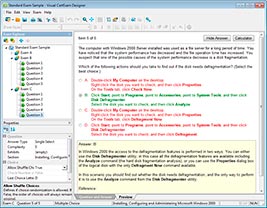
HOW TO OPEN VCE FILES
Use VCE Exam Simulator to open VCE files
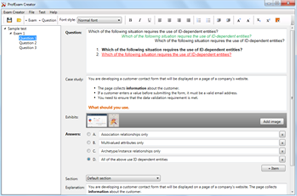
HOW TO OPEN VCEX AND EXAM FILES
Use ProfExam Simulator to open VCEX and EXAM files
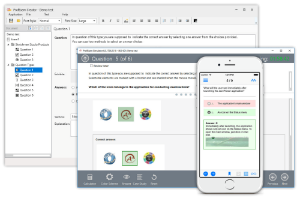
ProfExam at a 20% markdown
You have the opportunity to purchase ProfExam at a 20% reduced price
Get Now!